


George Soros developed the theory he calls “reflexivity” in financial markets, which is the two-way feedback loop between the biases and perceptions of market participants and the economy’s fundamental reality. In other words, it’s a self-fulfilling prophecy.

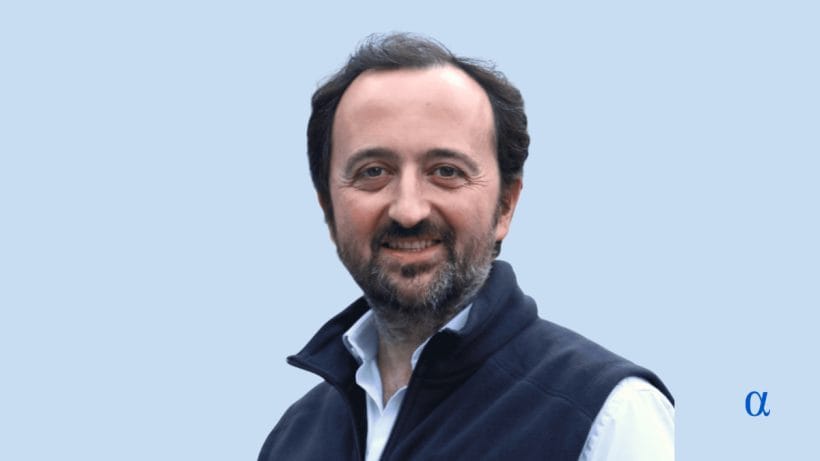
In an interview with Hedge Fund Alpha, Giuseppe Sette, president and co-founder of Reflexivity, explained why AI comes up short on analyzing the market’s feedback loop — and why the self-fulfilling prophecies caused by AI are not a big deal.
AI’s role in identifying the feedback loop
AI is widely marketed as being capable of scanning massive amounts of unstructured data like news sentiment, social media and earnings call transcripts to quantify shifts in market narratives and biases before they fully impact asset prices. However, in terms of market prediction using natural language processing, Sette thinks AI comes up short.
Describing them as “vanilla natural language models,” he said they tend to focus on the verbal side of reasoning, meaning they’re very good at telling you what the next word will be in a conversation. However, Sette added that these natural language models just can’t make accurate predictions on the market’s direction — at least not yet.
“You need a higher form of reasoning to be able to tackle what is happening in complex systems like the market, especially because the markets are changing,” he explained. “Just like your dead internet theory tells you that if you go on Reddit, the majority of posts are bots, when you go on the market, you need to be aware that there is a lot of automated trading. There's always been; let's not make a mistake. But it's obviously accelerating, thanks to the fact that now we have new tools that help us do that better.”
Also see: An Analysis Of Warren Buffett’s Very Early Investments: Interview With Brett Gardner
The real reason we train AIs
Knowledge graphs are an important part of how AI analyzes the market. It’s extremely expensive to train a large language model. Sette noted that we don’t train AIs because we want to impart knowledge on them, but rather, because we want to give them reasoning capabilities.