


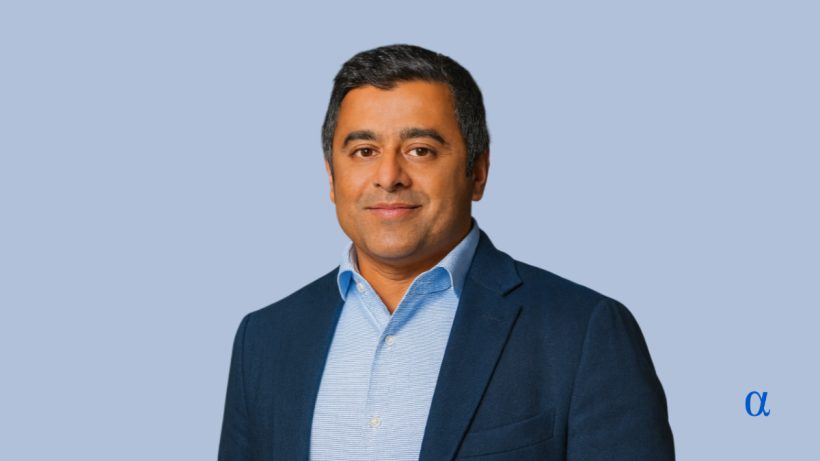
The picks-and-shovels trade for AI is huge news right now, but the key to potentially winning is to find a unique angle on it. In an interview with Hedge Fund Alpha, Priya Kodeeswaran, CFA, Founder and CIO of Katamaran Capital shared where he sees the greatest pockets of opportunity. While he thinks the picks-and-shovels trade for AI is crowded, he sees new tangential areas coming into play for investors.
Background on Priya Kodeeswaran

Born in Sri Lanka, Kodeeswaran’s family moved to Canada when he was just over a year old. He grew up in Canada in what he described as a “WASPY working-class kind of neighborhood in Toronto.”
“My parents grew up in a very comfortable Sri Lankan middle-class existence, but my dad saw the trouble coming with the civil war that was about to kick off and emigrated to Toronto to get his kids a better life,” Kodeeswaran explained. The family had to start again in Canada, i.e., to initially live in an apartment first before moving up the ladder to move to their first and then second house as they reestablished themselves.”
Despite growing up in Canada, he feels his cultural background significantly shaped his future. Kodeeswaran thinks the Sri Lankan Tamil principles of getting a strong education, working hard to gain an edge, and using your brain as your differentiator were ingrained in him, making the transition to investing natural for him.
Pursuing finance
About a year after graduating from McMaster University, Kodeeswaran moved to Prague to work in private equity for Europa Capital Management, which was acting on behalf of the legendary hedge fund/ PE shop Odyssey Partners in New York. The firm was taking advantage of the dislocations arising from the transition from communism to capitalism in the mid-1990s.
In 1997, Morgan Grenfell recruited Kodeeswaran to move to London and work as part of their fund management graduate program but as an industry hire. Although he wasn’t a recent UK graduate student, he was joining a cohort of graduates who came from esteemed British universities at the time. He worked as a PM for both the Emerging European and then the Continental European teams.
Kodeeswaran then moved to a startup hedge fund before eventually joining Cheyne Capital in London, working there for six years running a book strategy. Next up was RWC Partners, where he launched his own fund in a UCITS wrapper in 2010.
Man GLG recruited Kodeeswaran to relaunch on their platform, which Kodeeswaran did along with also relaunching his old UCITS fund, which he successfully ran until Q1 2020. Millennium Management poached him during the COVID-19 pandemic to relaunch on their internal platform in 2020. In 2023, he departed Millennium to relaunch his own fund under his own investment firm, Katamaran Capital, anchored by Brummer & Partners.
Katamaran is a London-based hedge fund launched in 2024 with now over $475 million in assets under management, an alpha driven, low-net global long/short equity strategy. The firm focuses intensely on alpha generation from both long and short books, with low correlation to broad equity markets, and an emphasis on strong downside protection. Katamaran utilise a fundamental catalyst driven approach paired with data, systems, and AI tools for research and market timing.
Also see: This Emerging Manager Manager Persevered With BYD – And Got What He Was Looking For [In-Depth]
“I've relaunched this strategy a couple of times, and I've run it for very big hedge funds,” he said. “The major difference is I am doing it at my own firm, which is a big difference. As a fund manager, you often take for granted all the other functions that come with being at a big firm. At Katamaran we are using a number of key partners including Tier1 prime brokers, service providers and third parties, along with the internal operations team I have assembled, to oversee that as well as run the fund.”
Evolution of Kodeeswaran’s strategy
Like most managers, Kodeeswaran’s strategy has changed over the years. In the 2000s and 2010s, he noted there was much more beta or factor in returns for everybody. He explained that even those who made money when the markets were down knew they were partly making it from factors and particularly beta.
“I think from Man GLG 2016 onwards was a proper exposure to understanding idiosyncratic returns and factor returns,” Kodeeswaran explained. “It has been a low net Alpha focused strategy since then, while still understanding the limitations of a solely factor restricted approach in managing money. Some platforms have an almost religious obsession with factors, which we think can be limiting for our approach because the factor models are backward looking by definition. Therefore, at Katamaran, we try to also take advantage of where the factors are only reflecting the past, but not the future. This often happens where change has occurred or is in the process of occurring. Ultimately, I developed a strong awareness of real alpha, real idio-investing from ‘16 onwards, but also understanding where some of those pure factor-oriented schools may be limiting themselves on investment returns by purely using a backward-looking factor model to manage risk exposure.”
Also see: This “Amazon For Hedge Funds” Offers Free Access to Allocator & Hedge Fund Information
On launching Katamaran Capital
When he originally launched his fund at RWC, Kodeeswaran did it within the framework of and utilizing the resources provided by the firm. When he launched at Man GLG, he did the same, enjoying the status of working with a much larger hedge fund.