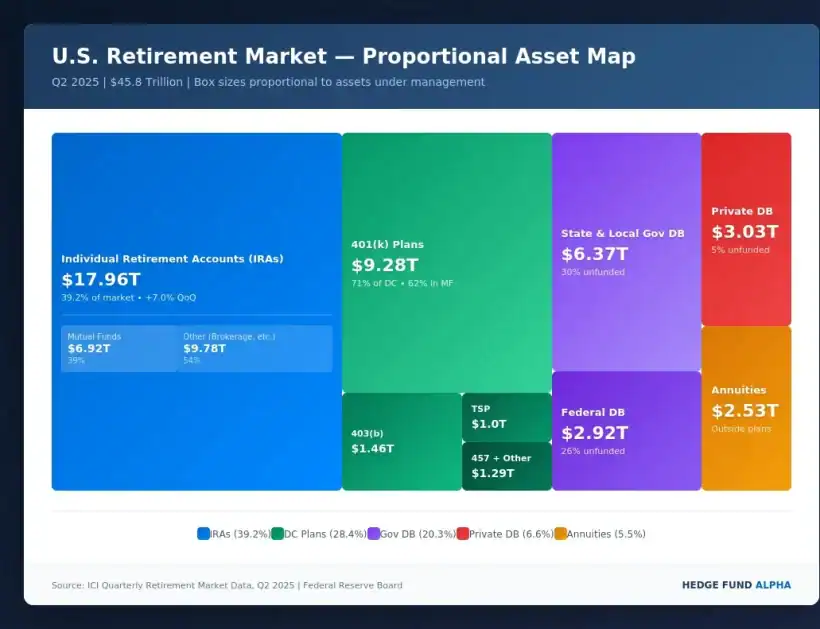


Policy shifts around 401(k)s have dominated headlines recently, as President Trump’s Executive Order in August announced the inclusion of alternative and private assets in 401(k)s, historically restricted to only public assets.
More recently, the Trump Administration signaled interest in adopting elements of the Australian superannuation model, which leverages a superannuation framework requiring employers to contribute a fixed percentage to employees’ retirement funds, expanding the participant pool and capital under management. Whether adopted in the U.S. or not, the policy shift indicated from the highest government level underscores a broader ambition – to expand participation while diversifying the assets used to build long-term retirement outcomes.
The future of retirement accounts is in flux, with the methods used to build and save everyday wealth shifting nationwide. While these changes promise easier access to alternative assets like private equity, real assets, or evergreen funds, they introduce compliance complexities and unique regulatory guardrails that differ greatly from those applied to traditional public market investments. For fund managers and administrators, the issue is no longer whether private assets can be included in retirement accounts but whether they meet the operational and regulatory standards these accounts require.
More participants result in more scrutiny
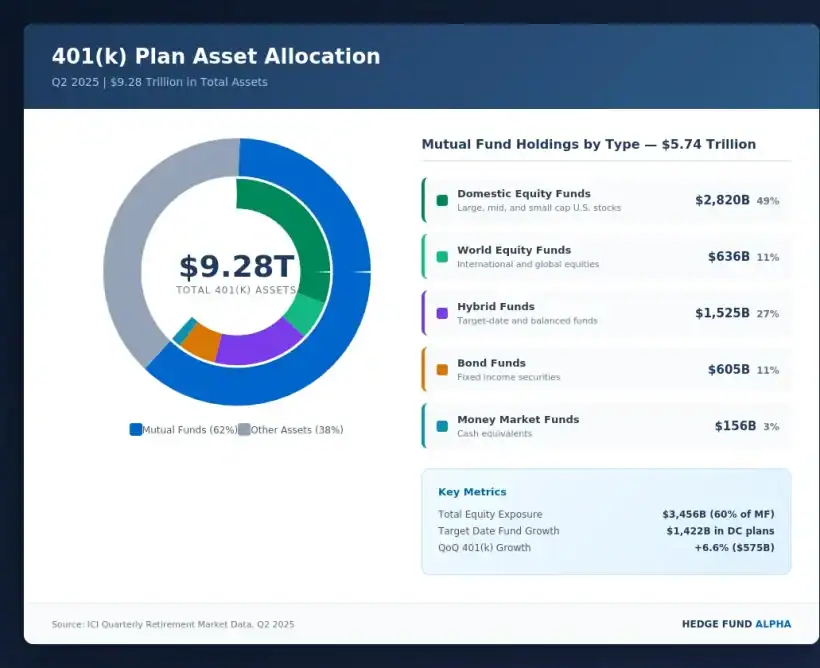
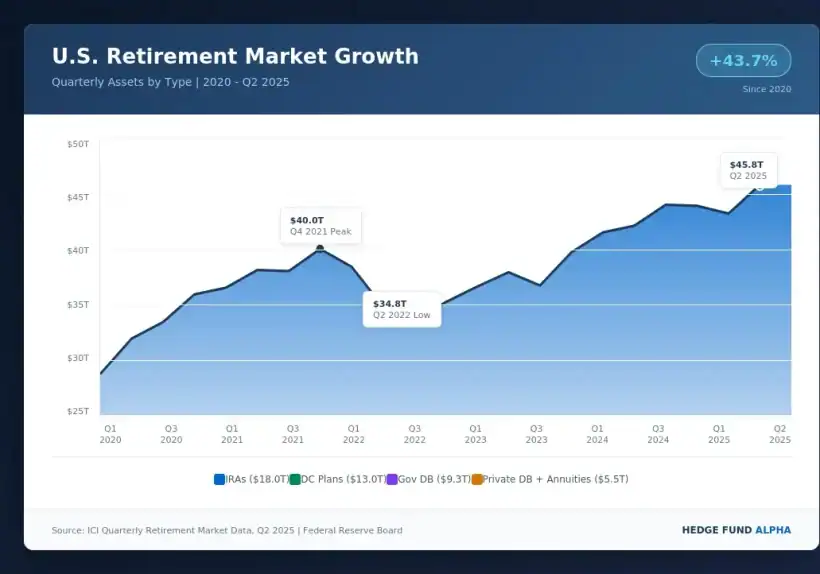
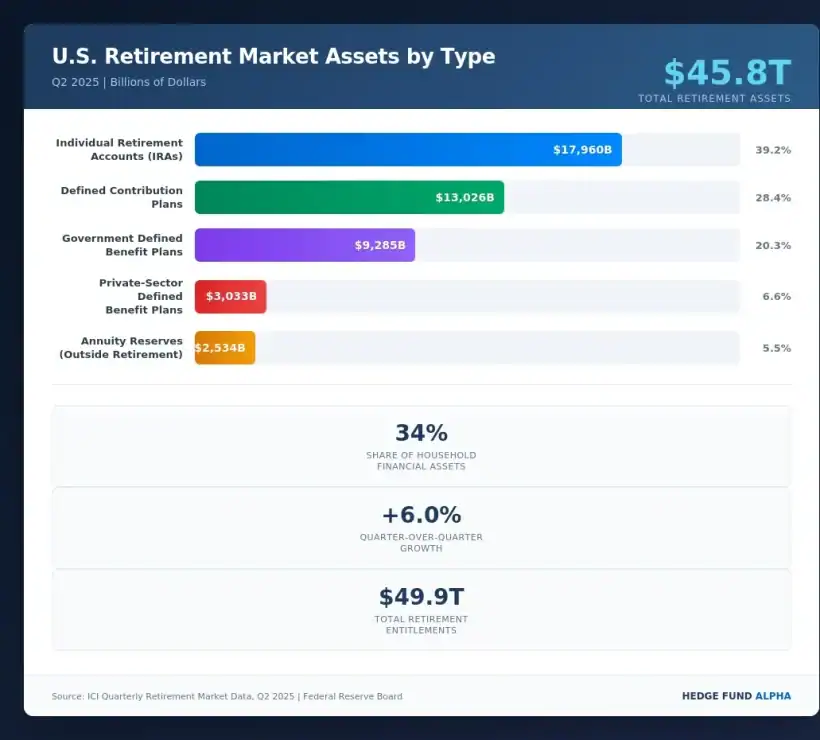
There has been a steady increase in participants and assets under management in 401(k) plans in recent years. In June of 2025, total U.S. retirement assets reached $45.8 trillion, a 6% increase from just three months prior in March. With scale comes heightened expectations from both regulators and from plan participants themselves.
As plan participants and capital inflows increase, fund administrators managing assets through evergreen vehicles or funds-of-funds face heightened regulatory scrutiny and more bespoke reporting requests from participants. Retail investors, accustomed to public market benchmarks, historically expect transparent and real-time valuation updates and clear explanations of liquidity mechanics. Asset managers must be able to deliver timely valuation and liquidity reporting in an environment designed for long-dated, illiquid investments.

Private and alternative assets in 401(k)s
Interest in private and alternative assets’ inclusion in 401(k)s is expanding, particularly amid heightened market volatility. Investors – institutional and retail alike – are increasingly viewing alternative assets as a means of diversifying risk and cushioning public market swings. Evergreen funds specifically are emerging as unique vehicles for alternative investment portfolios in 401(k)s, as they recycle proceeds from exits into fresh opportunities, typically in private credit, secondaries, or real estate.
Because of this expanded interest, private assets are being evaluated through the same regulatory lens as traditional retirement investments. Additionally, evergreen funds are often registered under the Investment Company Act of 1940, requiring valuable investor protection and fund disclosures. In 401(k) plans, these vehicles may appear as collective trusts, interval funds, or periodic tender offers, included as limited allocations within target-date funds for private market exposure. This allows for more frequent daily NAV reporting despite underlying illiquid assets.
While evergreen funds offer diversified returns for investors in retirement accounts, they also introduce potential pitfalls that require careful management:
- Pricing transparency and bespoke reporting: Assigning value to alternative assets requires steady daily NAVs and independent reporting. Inaccurate valuations might not only disrupt participant outcomes but could also attract unwanted regulatory attention
- Liquidity management: Illiquid alternative assets may introduce challenges for managers tasked with moving allocations regularly. For evergreen funds, if too many participants want to exit at once, fund managers must be able to rely on redemption limits such as lock up periods and quarterly gates to avoid regulatory scrutiny
- Conflicts and fee visibility: Retirement accounts impose strict rules and penalties around conflicts of interest and fee clarity. Private assets may exacerbate these challenges, increasing the need for centralized data and consistent disclosure practices
- Investor protection and disclosures: As private assets gain exposure and become more accessible to retail investors, regulators require clear communication about risk. Fund managers must be equipped with accurate, transparent data to provide real-time updates to clients and uphold these regulatory guardrails
Legacy platforms and processes often exacerbate these challenges by producing scattered and inconsistent liquidity and reporting data, requiring time-intensive analysis to assess liquidity accurately and deliver a comprehensive, audit-ready trail for regulatory review. To meet the modern needs of 401(k) plan participants, fund managers must leverage modern tools to collect and organize accurate data, provide bespoke reports for individual plan participants, deliver real-time valuation information, and avoid unnecessary audits.
From operational overseers to risk managers
As retirement plans and policies evolve, fund managers are transitioning from back- and middle-office operational managers to regulatory risk mitigators. They must not only uphold unique client demands and manage a broader mix of asset classes – with signs pointing to continued growth in private and alternative allocations – but also ensure regulatory requirements are met and audit trails are comprehensive and clear.
As the U.S. retirement system continues to evolve, influenced by international models and an expanding mix of asset classes, further regulatory change appears inevitable. With broader access to 401(k) plans, fund managers must be prepared for tighter oversight, increased report rigor, greater transparency, and the ability to rely on cohesive, real-time data across portfolios.