



The hedge fund industry is experiencing a large shift in technology adoption, with artificial intelligence (AI) emerging as the factor separating industry leaders from laggards. J.P. Morgan's Capital Advisory Group released a recent report titled "Leveraging Artificial
Intelligence in Hedge Funds", which took a look at how hedge funds are using AI. According to the report, AI adoption among hedge funds is growing quickly: frown from 18% in 2024 to 46% in 2025, representing a 156% year-over-year growth rate.
The numbers paint a picture of an industry in transition. While 46% of hedge funds now use AI technologies, an additional 30% are actively investigating implementation, suggesting that adoption rates will continue climbing. Only 24% of firms report no current AI exploration.
Also see Soroban Capital – AI Is Changing The World & These Stocks Will Benefit [Exclusive]
The geographic distribution of AI curiosity reveals regional patterns. European, Middle Eastern, and African (EMEA) hedge funds demonstrate the highest level interest at 34%, compared to 29% in North America and 25% in Asia-Pacific. However, EMEA also shows the lowest resistance, with only 5.7% of firms indicating no further exploration plans, suggesting this region may lead the next wave of adoption.
Size Matters: The Scaling Advantage
Hedge fund size is a key determinant of AI adoption success. The data reveals a correlation between scale and AI implementation:
- Firms with fewer than 5 employees: 39% adoption
- Mid-size firms (21-50 employees): 48% adoption
- Large firms (50+ employees): 74-75% adoption
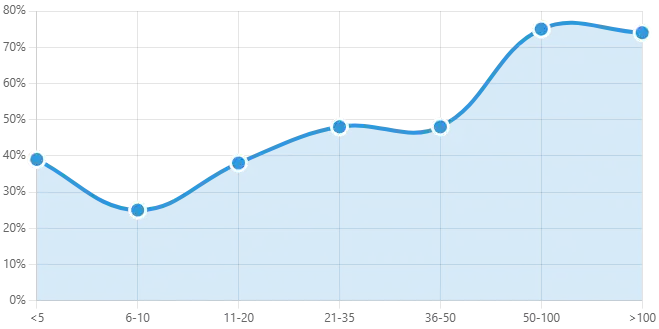
This pattern suggests that larger firms possess the necessary resources, expertise, and data volumes to effectively implement AI solutions. However, the notable exception - smaller hedge funds achieving 39% adoption compared to 25% for firms with 6-10 employees - indicates that startups may be bypassing traditional scaling constraints through cloud-based AI services.