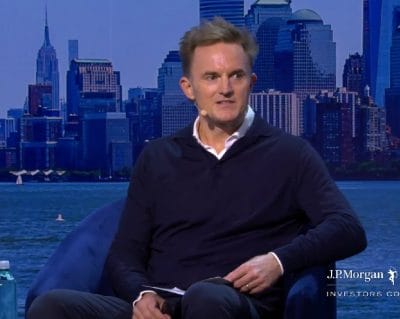
Ruane, Cunniff & Goldfarb Investor Day St. Regis Hotel, New York City - May 16, 2014
Question:
What percentage of the fund is in cash? Are you ever going to lower the 1% fee?
Bob Goldfarb:
Right now the fund is about 80% invested. Our asset base is about $8 billion and our cash is about $1.6 billion. We charge a flat 1% on both the separately managed portfolios and on Sequoia because they are treated the same. They get the same allocations; they buy the same stocks, et cetera. We have had that fee structure for decades and we hope to be able to continue to earn it.
Question:
Congratulations to Jonathan for being one of the questioning analysts at the Berkshire meeting. I was wondering what your major takeaways from the meeting were and how you view the security.
Jon Brandt:
When you have been following Berkshire as long as I have, and many of you have, and Warren has been running it for 49 years, I would say that the major purpose of the meeting is just to see how sharp his mind is. And it is as sharp as ever.
Bob Goldfarb:
Five hours of Q&A.
Jon Brandt:
His stamina is amazing. It is almost impossible for anything material to come out of the meeting. It is a little bit of a carnival. There were some better questions asked, I think because of the format changes. But I would struggle to come up with any significant takeaway. In terms of the responses to my questions, I thought it was interesting that he said that he is not going to 3G Berkshire, if I can use 3G as a verb. But I cannot say I was surprised by that answer. Bob, did you have any key takeaways?
Bob Goldfarb:
No, I would just say in the last year or so, both in the annual reports and at the meetings, he has been more optimistic. Do you have that sense?
Jon Brandt:
Yes, certainly last year with the 12% growth, I would not call it guidance, but saying that it was a possibility or there was a reasonable chance of getting there, that sounded more ebullient than I would have expected.
Bob Goldfarb:
He has always wondered about the barriers that size would present to him. And clearly, as Jon said, the compound has slowed down as it has gotten larger. But he feels pretty good that even at this level of assets and stock price that he can continue to compound at a pretty good rate. So that has been the message that he has conveyed both in the annual report and at the annual meetings.
Greg Alexander:
One of my favorite lines of all time came from the most recent Berkshire annual. Jon, you are going to have to correct me on this. But he said that he now owns eight and a half — you like the line too — he now owns eight and a half companies, half of Heinz being the half, out of the Fortune 500, so he still has 491 and a half to go. Then he said the most remarkable thing, which is that he has bought most of those without issuing a material number of shares or running up the debt.
Jon Brandt:
David, did you have any key takeaways?
David Poppe:
I thought he was a little less connected to some of the businesses than you would like to see, and it just shows the size of Berkshire. It is harder to keep your head around everything that you own, even as smart as he is. I thought there were a few businesses that he was just not as connected to as I might have expected.
Jon Brandt:
I would say that is a good point. I asked a question about Forest River and the company’s competitive advantage versus Thor. He said he did not know much about Thor. I think maybe 20 years ago, he would have devoured the annual reports and tried to get intelligence on the competitors. But he just seems to be trusting in Pete Liegl to do a good job at Forest River, which would include keeping an eye on his competition. There just might be too much for him to follow and maybe his attention flags a little bit from things like that.
Bob Goldfarb:
What percentage of Berkshire's earnings is Forest River?