


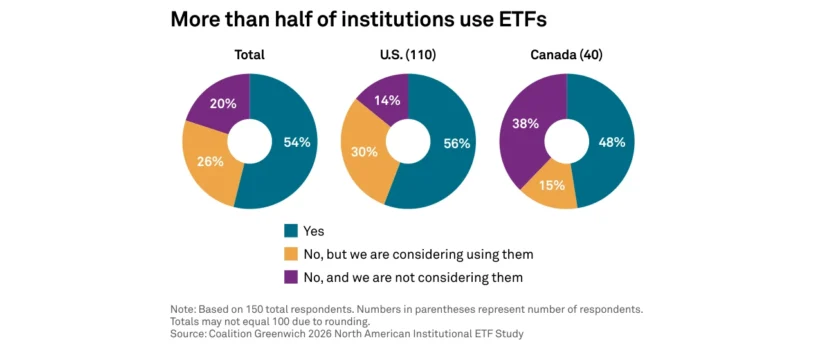
A new research report from Crisil Coalition Greenwich, sponsored by S&P Dow Jones Indices, tracks the growing institutional use of exchange-traded funds (ETFs) by the numbers, capturing total ETF adoption, how ETFs fit into overall portfolio strategy, and the primary reasons institutions use ETFs in place of other asset classes. The findings are based on interviews with 150 institutions across the U.S. and Canada. Here are some of the key findings.
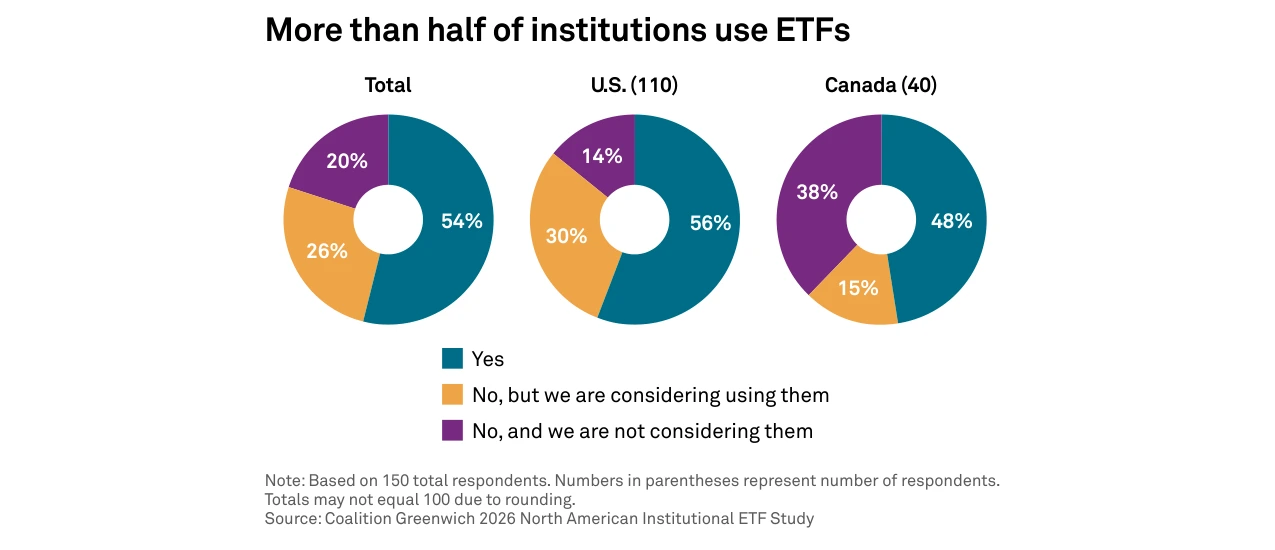
54% of North American institutions now use ETFs
More than half of North American institutions now employ ETFs in their investment portfolios, and more than one-fourth (26%) of institutions that have not yet adopted the funds are actively considering introducing ETFs. Large institutions (over $10 billion AUM) are most likely to use ETFs (63%), while small shops (under $1 billion AUM) are least likely (29%).
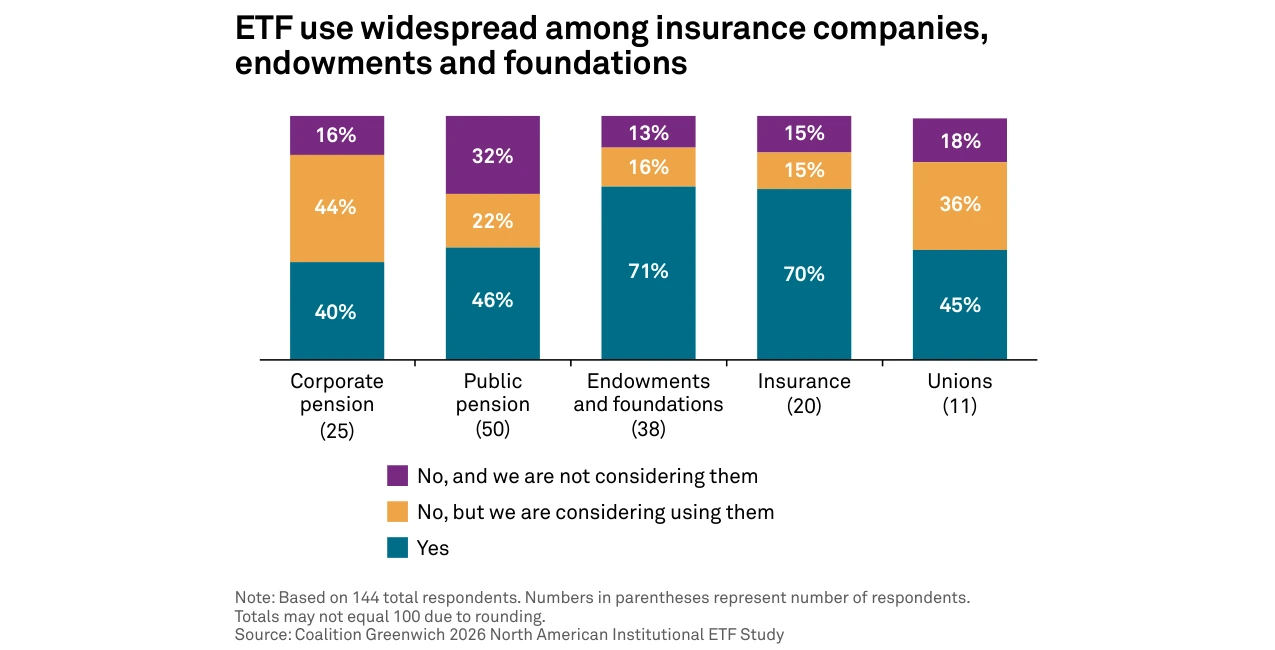
Insurers and endowments are the biggest ETF power users. More than 70% of North American insurance companies and endowments and foundations are using ETFs in their investment portfolios. ETF usage is considerably lower among other types of institutions, but a sizable share of pension and union funds are considering adopting ETFs, including 44% of corporate pensions.
Index mutual funds are on the chopping block. Institutions are using ETFs to replace a wide range of investment vehicles, including index mutual funds, institutional separately managed accounts (SMAs), active mutual funds, and individual stocks. Insurance companies have been by far the most active in replacing other alternatives with ETFs. Meanwhile, 40% of corporate pension funds are using ETFs to replace SMA/UMAs.