

Dan Loeb’s letter to Third Point investors for the first quarter ended March 31, 2026.
Read more hedge fund letters here
Dear Investor:
During the First Quarter, Third Point returned -0.6% in the flagship Offshore Fund and -0.3% in the Ultra Fund. Assets under management on March 31, 2026, were approximately $24.1 billion.

The top five winners for the quarter were MasTec Inc., Siemens Energy AG, Keysight Technologies Inc., Carpenter Technology Inc, and Caseys General Stores Inc. The top five losers for the quarter, excluding hedges, were CoStar Group Inc., Capital One Financial Corp., Somnigroup International Inc., Amazon.com Inc, and CRH PLC.
Portfolio Updates
We had a strong start to the First Quarter with diversified gains in semiconductors, memory, semicap equipment, power infrastructure, aerospace and defense positions. Despite taking profits on numerous positions and significantly reducing both net and gross exposures well before the start of the war in Iran, we ended the quarter slightly down, outperforming the S&P by approximately 400bps for the period.
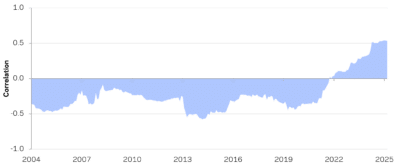
The turmoil began later in Q1 when a seemingly contained unwind in private credit seeped into public markets, first through software financing channels and also more broadly via financials, and the Iran War drove nearly a 70% upward move in oil prices. Leadership broke down, correlations rose, and crowding in winning AI trades became a liability rather than a tailwind. Despite weak labor data, benign CPI, and a steady Fed, new oil-driven inflationary fears pushed yields higher and reset the prevailing expectations of further Fed easing.
Our exposure reduction began in February, when many of our positions reached a target price or were beneficiaries of factor rotations, not a change in fundamentals. Two examples of such exits were our timely sale of a large position in the rails and the complete exit from Kimberly Clark (the successor to last year’s Kenvue position), with the latter benefiting from a spike in demand for defensive securities.
Single Name Shorts
The single name short book performed as intended in Q1, returning 7% gross and 6.6% net of fees and expenses, on $2.4 billion of average exposure across ~60 positions. Performance was broad-based, with declines across software, information services, healthcare, consumer discretionary, and financials. Several themes drove returns.
In housing, we leaned into the disconnect between policy support and underlying affordability. Despite what strikes us as a series of populist and unorthodox measures taken by the Trump administration, housing demand has continued to deteriorate, with existing home sales at GFC levels. We built a large short across housing and building products, which has been a meaningful contributor.
In consumer and healthcare, the continued democratization of GLP-1s—on price, access and form factor—has continued to erode demand for spirits and other staples historically supported by unhealthy consumption. It is also creating what we see as durable headwinds for a range of medical device businesses relying on obesity and poor lifestyles.
See more hedge fund letters here.
Indra Sistemas
We initiated a position in Indra Sistemas, an emerging national defense champion in Spain, in 2025. While Spain still consistently underspends on defense compared to NATO targets, it has committed to increasing defense spend as a percentage of GDP from ~1.4% to ~2% and to allocating most of this to local companies. Indra has, in our assessment, emerged as the national champion thanks to its unparalleled deep technical expertise in radar systems, counter-drone systems, military simulators, cyber and space while also acting as a systems integrator on major European programs.
The company reported stellar Fourth Quarter earnings at the end of February and showed a defense backlog that nearly quadrupled year-over-year. Of the 31 special modernization projects (PEMs) the Spanish government allocated in the back half of 2025, Indra won allocations on 29. Management commented that they expect a similar level of PEMs in 2026, implying Indra could exit the year with a backlog approaching €20 billion, up from just €3 billion exiting 2024.
CoStar
Last year we invested in CoStar with a simple thesis: value in the company’s core commercial business could be unlocked by improving a deficient board that for years had blessed large investments in a failing venture, Homes.com.
Despite our efforts, CEO Andy Florance has continued what can only be seen as a reckless drain on a majority of the company’s operating income into Homes.com and related acquisitions even as the share price has continued to plummet.
It appears to us that Mr. Florance’s obsession with Homes.com has diverted attention from core business areas, calling into question management’s ability to maintain a competitive edge in Apartments.com and the CoStar Suite in a rapidly changing market and with no apparent plan for a world increasingly shaped by AI.
See more hedge fund letters here.
Corporate Credit Update
The corporate credit book was flat for the first quarter of 2026, marginally outperforming the High Yield index, which declined almost 60bps. Our large positions in X/Twitter and xAI debt were called at a premium following those companies’ acquisition by SpaceX. Brightspeed, which was a loser last year, became our largest winner this year, as investors refocused on both the value proposition of fiber and the company’s ability to potentially finance it more cheaply in the ABS market.
Our two largest losses were positions in the GSEs and Claritev. We do not own GSE (Fannie/Freddie) common stock but did take a position in the GSE preferred based on optimism that the Trump administration would follow through on its announced plan to have the GSEs exit their 17-year conservatorship and go public. This narrative has faded as concerns around “affordability” have risen, which has, at least for now, sidelined the potential IPO, pressuring security prices. We do not believe that these goals are at odds with each other – to the contrary, we believe that the path to better housing affordability goes through the GSEs, specifically releasing them from conservatorship to allow them to further grow their mortgage books and drive rates lower. While we have learned to expect the unexpected with this administration, progress on the GSEs remains, in our read, a matter of when rather than if – though the midterm calendar likely determines the timing.
Structured Credit Update
We opened 2026 strongly with tighter credit spreads, a rally in interest rates, constructive policy headlines around the Treasury purchasing $200 billion of mortgages, and reforms for consumer debt including credit cards. Amid the geopolitical stress in March, credit spreads widened and rates sold off with higher oil prices. In this turbulent macro environment, structured credit has split into two distinct markets. The private asset-backed credit investing side of the market has remained resilient, as private credit funds look to lend more in the asset class for its monthly, predictable amortization, high coupons, and access to monthly data. By contrast, trading in structured credit was compelling to us in the last few weeks of the quarter as investors looked to reduce exposure on fears that macroeconomic pressure will persist.
We played on both sides of these markets. We employed our asset-based credit strategy to refinance a residential mortgage transaction in early March, selling over $300 million of risk inside of a 5% yield, creating structural term leverage and equity-like returns for our retained exposure. On the trading side, we were a liquidity provider to several issuers in the rental car space who wanted to issue debt before the end of the quarter.
We added across residential and consumer ABS in the secondary market as spreads widened. We continue to monitor the CLO market and are observing increased tiering among managers with less software exposure and anticipate there will be opportunities in the coming quarter to invest. With a $6 trillion addressable market in structured credit, we anticipate more investors with private credit capital will continue to push into our market on the lending side, which would stabilize spreads. From our hedge fund trading perspective, we are constructive about the trading opportunities we see as the consumer balance sheet evolves with higher oil prices, higher interest rates, and potential employment displacement with AI.
Sincerely,
Daniel S. Loeb
CEO
Third Point
Read the full letter here.