


The company’s archive of hedge fund investor letters, catalogued since 2011, is now available to institutional buyers as a structured data product.
Hedge Fund Alpha has unveiled hedge fund investor letters data available to institutional buyers as a structured data product. The release formalizes material the company has covered and catalogued through its editorial operations since 2011, and is the first in a series of data and tooling releases the company expects to roll out over the coming months.
The product consists of a tool which converts an archive of thousands of investor letters, published from 2011 to the present, into a consistent structured dataset. The data is then delivered to institutional investors via pre-signed links in AQS. Because each item in the archive carries a publication timestamp from the date it was originally covered, the dataset functions as a set of point-in-time records, capturing what managers wrote at the time they wrote it, rather than as reconstructed after the fact. This distinction matters for buyers who need to know when information became available. Going forward all data is true PIT with verified timestamps and stored with a verifiable audit trail.
Origin
The decision to build the dataset came from the buyer side. Over the past year, quantitative and systematic firms approached the company about systematic access to the underlying corpus of letters and conference material. Those requests were the catalyst for structuring an archive that had previously existed as editorial coverage. The product is the formalization of work it was already doing, rather than a new editorial direction.
Coverage
The dataset covers two categories of source material. The first is hedge fund investor letters, which form the core of the Structured Letters project and reach back to 2011. The second is investment conference data: structured, position-level coverage of presentations given at investment conferences, also numbering in the thousands of items. Both are delivered in a consistent structure, allowing buyers to work across the two formats. The material spans a range of strategies and geographies and reflects the discretionary managers the company has covered over that period.
Rights classification
Source material across the archive reflects a range of acquisition paths, from fully public documents to material that requires more careful handling. Every record in the dataset is classified against a rights framework that has been reviewed by lawyers who specialize in alternative data. The classification allows buyers to filter the data according to their own compliance posture: a firm with a conservative internal view can work with a more limited subset, while a firm with broader latitude can access more of the archive. The rights classification is a field on every record.
Current use
The product is in use. It is going into trial with a large global asset manager under an executed agreement, and a systematic trading firm has engaged the company on structured access to the corpus. A number of institutional firms are also active subscribers to the company’s existing research service. Diligence documentation prepared to institutional standard, including a trial license, a mutual non-disclosure agreement, a due diligence questionnaire response, and a data tear sheet, is in place.
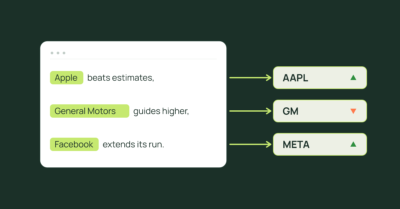
Byers use the data to track manager conviction and positioning over time and across groups of funds, to follow how commentary on specific companies and themes develops in managers’ own words, and to test signals derived from that commentary against a consistent historical record.
Availability
The Structured Letters project is the first of several planned data and tooling releases. Detailed schema, sample records, coverage statistics, and technical documentation are made available to prospective buyers under a mutual non-disclosure agreement. Firms interested in evaluating or licensing the data can contact the company at [email protected]. A structured data overview is available here.