

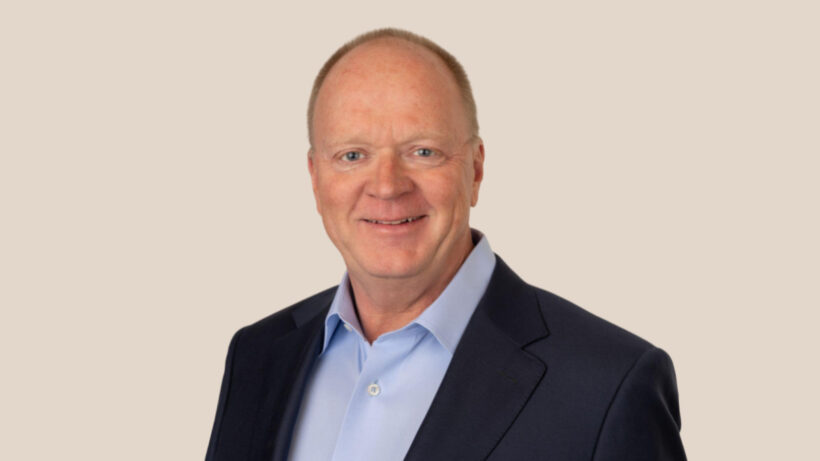
When it comes to valuing mining names, many investors only look at the resources that have already been announced. However, Kevin Smith of Crescat Capital says there’s a better way.
In an interview with Hedge Fund Alpha, Smith shared his strategy, lack-of-sustainability thesis for artificial intelligence, and six small-cap mining names he says are worth watching.
Background on Kevin Smith

Smith grew up in the San Francisco Bay area and earned his bachelor’s degree in economics from Stanford. He began his career as an accountant with Arthur Young, now EY. After a couple of years, Smith attended business school at the University of Chicago, earning his MBA with a specialization in finance and a concentration in statistics.
“Even when I started my career as an accountant, my goal had always been to really get into the investment business to become a money manager,” he added.
Smith explained that his desire to get into the investment business evolved over time, although the earliest innings of that came when his father and his father’s investment advisor at the time shared some of Warren Buffett’s annual reports with him. His father told his investment advisor that his son wanted to pursue money management, and his advisor told him that Smith should learn accounting first because that’s the basis of financial analysis.
Early career and the launch of Crescat Capital
Following business school, Smith worked at Kidder Peabody as a high-net-worth stockbroker, building up a significant client base that moved with him. Four or five years before launching Crescat Capital, he joined a small firm that allowed him to publish his own research and build an asset management division, the predecessor to Crescat Capital. At the time, it was called Blake Street for where it was located next to Coors Field in Denver.
“We launched a large-cap strategy in 1999, our first hedge fund, the long/ short hedge fund in early 2000,” Smith recalled. “The beginning of what became Crescat was in 1999, so our track record goes back that far… We launched the global macro fund in 2006, and we launched the precious metals mining fund in August of 2020.”
Crescat is now up to about $550 million in assets under management in its three strategies: the Global Macro Funds, the Long/ Short Equity Fund, and the Precious Metals Mining Funds. Smith said they filled up all 100 slots for their original macro and precious metals funds, so they made available institutional versions of those funds as well.
Crescat’s three strategies
Crescat’s Global Macro Fund and its institutional version are the firm’s most comprehensive strategy. Smith calls it their flagship fund because it’s the one strategy capable of investing in any asset class or security in any country on both the long and short sides.
“It’s where we express all of the different macro themes that we have at Crescat,” he explained. “So Crescat is a value-oriented investment shop, but we’re also a macro-thematic-oriented investment shop. And that’s the strategy that gets access to all our themes. If you think about the Precious Metals Fund, that’s a subset of the Global Macro Fund, essentially, because our activist metals and mining portfolio right now is actually our largest thematic exposure across all our funds. And that’s the long equities associated with our mining portfolio. So you can think of the Precious Metals Fund also as a subset of the Global Macro Fund.”
Crescat’s Long/ Short Fund is an equity-only version of the Global Macro Fund. The team expresses its equity-only exposures, both long and short, in this macro-thematic fund. The core of Crescat’s holdings falls under the team’s natural resource equity positions. Smith said it’s because of their macro views on inflation and where they see the best value and growth opportunities in the market today. Crescat is heavily exposed to its activist metals and precious metals mining theme.
Sourcing ideas
Crescat is a macro thematic fund with a fundamental, value-oriented approach, but Smith is also a quant. He studied finance and statistics at the University of Chicago, and he considers quant models in his decisions. In fact, he’s had his current model for 30 years now. It involves scoring the top 1500 largest, most liquid U.S. equities across a variety of mostly fundamental criteria with a few technical criteria as well.
“The model has evolved to where we are actually now using AI, our own AI, a model that we’ve developed and our own weights that we have,” Smith said. “We do our own training; we do our own inferencing. But the whole construct of this fundamental quant model is something that’s perfect for our own AI model because that’s how it was always designed, where we have a variety of different factors. And we’re simply assigning weights to those different factors in the same way that an AI model would apply weighting.”