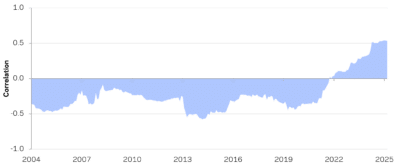



At the CFA Society New York event “Japanese Corporate Reform: Unlocking Decades of Undervaluation,” Haruyuki Yamashita, CFA, Head of Policy Engagement at the Tokyo Stock Exchange (TSE), delivered the keynote. His message was simple and he was explicit: Japan is now one of the most attractive markets in the world for global diversification. The rest of the talk was him explaining why with a focus on the numbers.
A market on its own cycle
Yamashita notes that while few observers realize – Japan is running on a different macro clock than the rest of the developed world right now. The Fed and the ECB are moving toward cuts. The Bank of Japan is raising. That divergence, on its own, makes Japan useful in a diversified portfolio.
He noted hat Japanese macro is meaningfully less volatile than U.S. macro over long horizons. Over the past 30 years, U.S. interest rates have swung from near zero to around 7%. Japan has moved inside a much narrower band. The country is deeply integrated into the global economy but does not trade like it, which is exactly the feature you want from a diversifier.
And for the first time in a long time, Japan is seeing inflation. After decades of falling or flat prices, the economy has shifted. That matters more than it sounds like it does, and he came back to it repeatedly.

The 2025 numbers
Foreign investors bought roughly 6 trillion yen (roughly $35-$40 billion in U.S. dollars) of Japanese equities in 2025, according to his team’s estimate. The flows were driven by two catalysts: rising geopolitical uncertainty out of the U.S., and elevated valuations in AI-related names pushing allocators to look for somewhere else to put incremental risk.
The returns rewarded investors who went with the rotation. The MSCI Japan index returned around 25% last year, against roughly 16% for the S&P 500.

Why the lost decades actually happened
Before getting into reforms, Yamashita wanted to explain why the Japanese stock underperformed for so long. His framing was not the usual macro story, of a giant bubble and demographic issues; rather it was caused by poor corporate governance.